

Big Bone Lick State Park History: Where American Paleontology Began in Kentucky

Updated: Mar 22
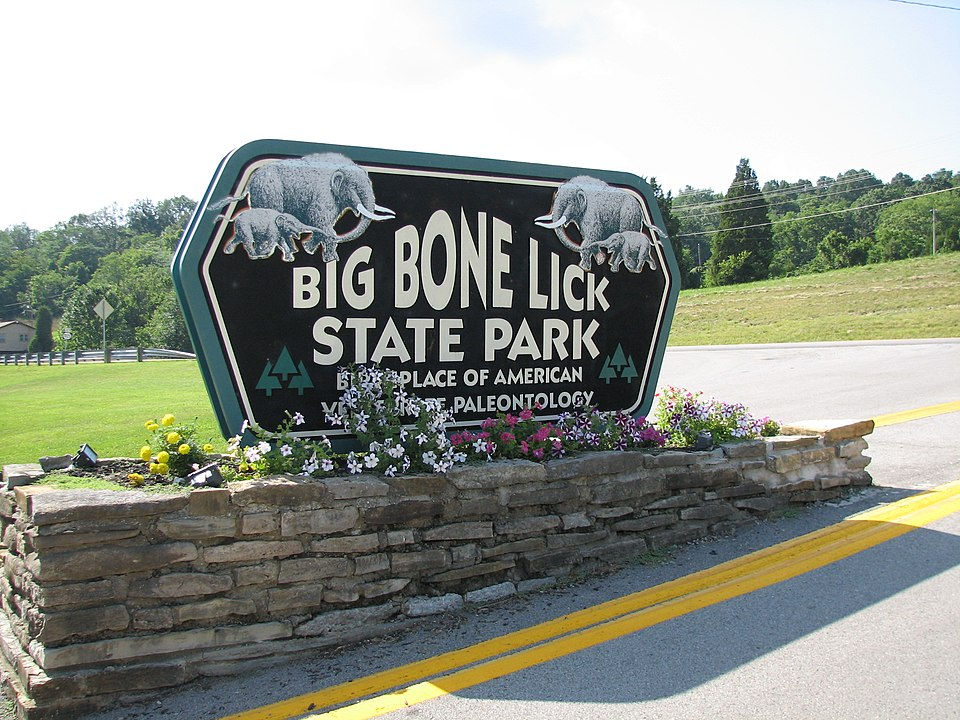
Mattguyver, CC BY 3.0 <https://creativecommons.org/licenses/by/3.0>, via Wikimedia Commons
Long before scientists understood prehistoric animals—or even believed extinction was possible—something strange was discovered in northern Kentucky.
Scattered across the muddy ground near natural salt springs were enormous bones.
Not deer. Not bison. Not anything familiar.
They were massive.
And they didn’t make sense.
This place—now known as Big Bone Lick—would go on to become one of the most important early fossil sites in North America and help shape how we understand prehistoric life today.
Planning a visit? See if Big Bone Lick State Park is Worth It or Not?
Why Giant Bones Were Found Here
The story starts underground.
For thousands of years, mineral-rich water pushed up through layers of limestone, creating natural salt springs at the surface.
These salt deposits attracted animals from miles away.
And not just small animals.
Massive Ice Age creatures gathered here, including:
Mammoths
Mastodons
Giant ground sloths
Ancient bison
Early elk species
But there was a problem.
The ground around the springs was soft, wet, and muddy.
Some animals became trapped.
Over time, their remains were preserved in the soil—creating one of the largest fossil concentrations in early America.
Thomas Jefferson and the Mystery of the Giant Bones
When reports of these massive bones reached Thomas Jefferson, he became fascinated.
At the time, many scientists didn’t believe extinction was real.
So Jefferson had a different theory.
He believed these bones might belong to a giant predator still living somewhere in the unexplored western territories.
That idea may sound strange now—but it pushed early American science forward.
Jefferson’s curiosity helped spark some of the first serious investigations into prehistoric life in North America.
The Connection to the Lewis and Clark Expedition
The fossil discoveries at Big Bone Lick even influenced one of the most famous expeditions in American history.
Before joining the journey west, William Clark visited Big Bone Lick in 1807 to excavate fossils from the site.
Clark supervised one of the first organized fossil digs in the United States, collecting mastodon bones and other remains that were later studied by scientists and displayed in museums.
Clark had already gained national recognition through the Lewis and Clark Expedition, which had been commissioned by Jefferson to explore the newly acquired Louisiana Territory.
The work at Big Bone Lick helped confirm that the enormous bones belonged to species of animals that had once lived in North America but no longer existed.
Why Big Bone Lick State Park Still Matters Today
Today, Big Bone Lick may look like a quiet park.
But its impact runs deep.
This site:
Helped launch early fossil research in the United States
Influenced scientific thinking about extinction
Connected exploration, science, and early American history
Visitors today can still see reminders of that past, including:
A small museum with fossil exhibits
Replicas of prehistoric animals
A live bison herd representing animals that once gathered here
Trails that follow the same landscape early explorers walked
A Place Where Science and Exploration Collide
It’s a place where:
Ice Age animals once gathered
Early Americans struggled to explain what they found
Science began to challenge old beliefs
And all of it started with a simple discovery:
Bones that didn’t belong.
Planning a Visit
If you're exploring northern Kentucky or traveling along the I-75 corridor, Big Bone Lick State Historic Site is one of the most fascinating historic stops in the region.
Add it to your Way Back Tours Bucket List Builder and start mapping the historic places, scenic parks, and hidden stories you want to explore across Kentucky.


Comments